Workplace Safety Insights
How Alaska employers can plan on-site safety training around remote locations, extreme weather, and limited access to training centers.
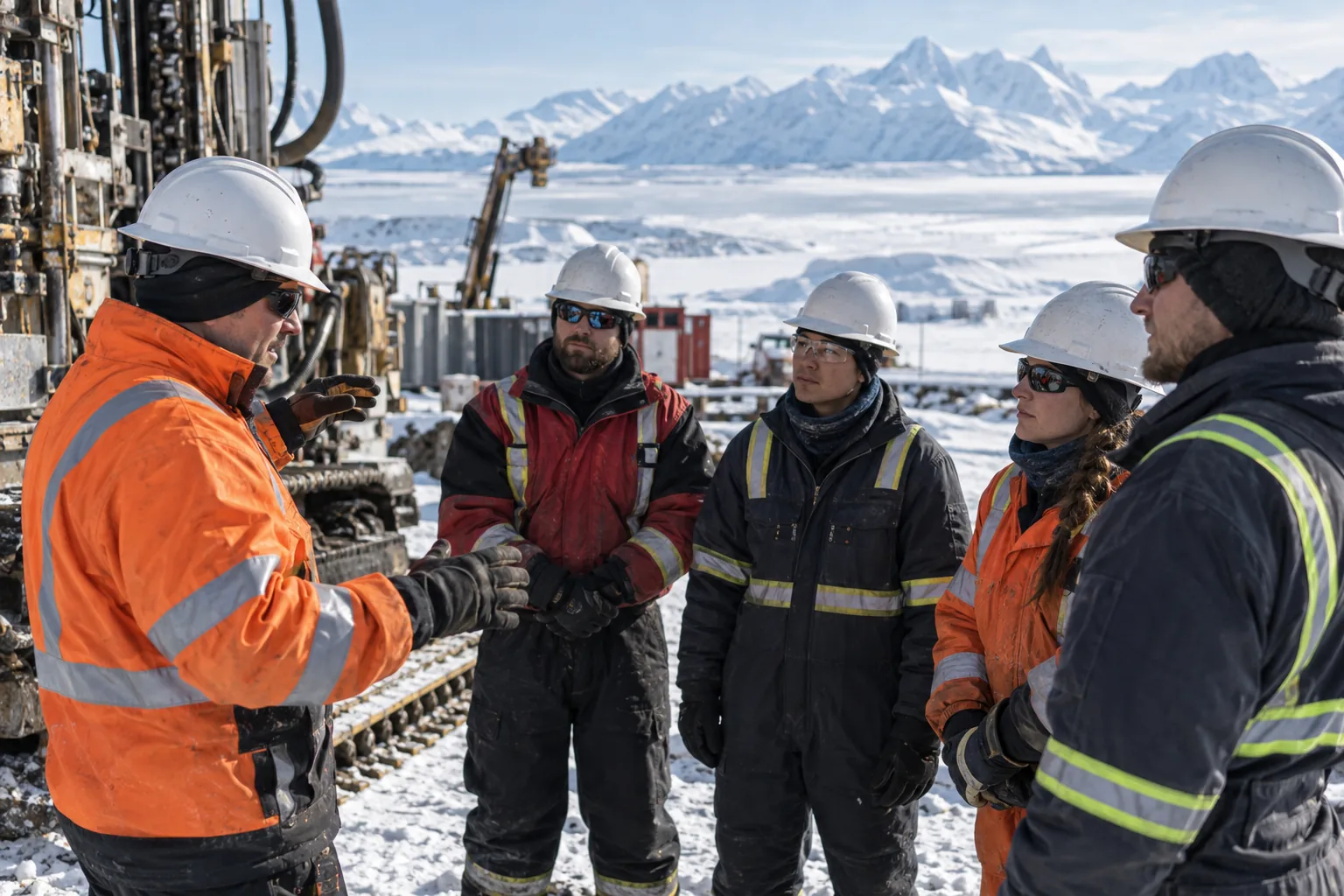
Running a safety program in Alaska comes with a set of problems most Lower 48 employers never have to think about. It's not just cold - it's distance, spotty cell coverage, seasonal crews, and job sites that might be a floatplane ride away from the nearest hospital. Generic safety training built for an office park in Ohio doesn't hold up out here, and most Alaska employers already know it.
This piece looks at what actually changes about safety training when your worksite is remote, and what to prioritize when you're planning it.
What Makes Alaska Different
A few things stack up that don't show up much elsewhere:
Distance changes the math on emergencies. If something goes wrong at a site hours from the nearest clinic, the standard "call 911 and wait" plan doesn't really apply. Weather adds real risk on top of the usual job hazards - cold stress, ice, whiteout conditions, and equipment that behaves differently at negative temperatures than it does on a training video shot somewhere warm. Communication can be unreliable, which matters when supervision or emergency coordination depends on it. And the industries driving a lot of Alaska's workforce - oil and gas, fishing, forestry, remote construction and infrastructure - each carry their own hazard profile on top of everything else.
None of this means training is impossible. It means it has to be planned differently than a standard program.
Training Priorities for Alaska Worksites
Cold and weather-related hazards deserve real attention, not a five-minute mention. Workers need to recognize the early signs of hypothermia and frostbite in themselves and in coworkers, understand how cold affects reaction time and grip strength, and know when conditions call for stopping work altogether.
Equipment operation in rugged terrain is its own challenge. Machinery that's routine to operate on a paved lot behaves differently on ice, gravel, or thawing permafrost. Our heavy equipment training and forklift training programs can be adapted to reflect the terrain your crew actually works on.
Emergency response looks different when the nearest hospital is a plane ride away. That makes solid first aid, CPR, and AED skills genuinely load-bearing rather than a nice-to-have. Our CPR, first aid, and AED training is worth prioritizing for remote crews specifically because response time from outside help can't be counted on.
Fall protection still matters just as much in Alaska as anywhere else, especially on construction and maintenance work at height, and cold or icy conditions raise the stakes further. See our fall protection training for what a program covers.
Getting Training to Remote Crews
The obvious problem: a lot of Alaska worksites aren't easy to reach. A few approaches help close that gap.
Mobile or traveling training setups can go to the site instead of requiring the crew to travel to a training center - often the more realistic option when a job site is hours from the nearest town. Blended learning, where theory happens online ahead of time and hands-on practice happens once a trainer arrives on-site, cuts down on the amount of in-person time needed without skipping the parts that require it.
Train-the-trainer programs are especially useful here - they let a site supervisor who's already on location run refresher training and reinforce safe practices between formal visits, instead of waiting for an outside instructor to be available again.
Compliance Notes for Alaska Employers
Alaska businesses may need to account for both federal OSHA standards and Alaska's own occupational safety and health program (AKOSH), depending on the industry and the specific hazard. Requirements vary enough by sector that it's worth verifying what applies to your particular operation and location rather than assuming a standard used elsewhere in the country covers you here.
Working With a Provider Who Knows the Terrain
A training provider that's actually operated in Alaska understands things a generic vendor won't - how weather affects scheduling, why remote logistics matter, and what "on-site" really means when the site is off the road system. All Purpose Safety Training Solutions has worked with Alaska businesses on exactly these kinds of constraints. Check our Alaska locations page or the Goodnews Bay, AK page for more on where we've been active in the state.
Getting Started
If your crew works somewhere the standard training playbook doesn't quite fit, that's exactly the kind of problem worth talking through before the season starts, not after an incident. Reach out to All Purpose Safety Training Solutions to discuss what a program tailored to your site and season could look like.
FAQ
Does OSHA or AKOSH apply to my Alaska business?
It can depend on your industry and worksite. Verify which standards apply to your specific operation rather than assuming.
How do remote crews keep training current between formal sessions?
A mix of train-the-trainer programs, periodic on-site visits, and online refreshers tends to work best when a site is hard to reach regularly.
Is wildlife safety training something we should include?
Depending on where your crew works, it can be worth covering alongside standard hazard training - particularly for remote or backcountry sites.


