Workplace Safety Insights
A practical rundown of the construction safety training courses most crews need, from fall protection to silica exposure prevention.
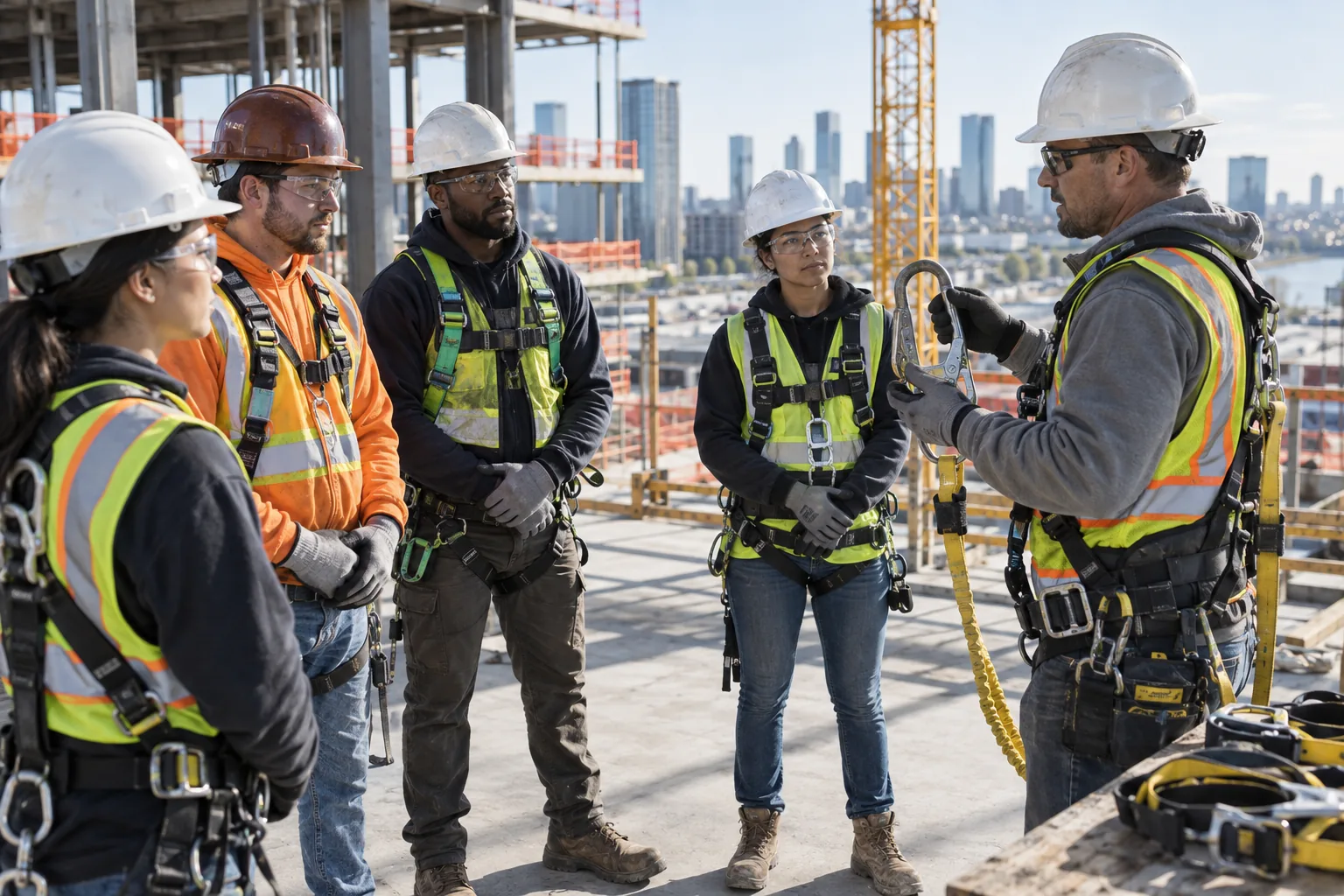
Construction consistently ranks among the more dangerous industries to work in, and it's not because contractors don't care about safety - it's because there are a lot of moving hazards on a job site at once, and training rarely keeps pace with how fast a project's scope and crew composition can change. A framing crew today might be doing demo tomorrow with half-new subcontractors on-site.
Here's a practical rundown of the training areas that show up on nearly every well-run construction safety program, and why each one earns its place.
Start With OSHA 10 or 30-Hour Outreach Training
This is usually the baseline, and for good reason. It covers general hazard recognition across the categories that cause the most construction injuries - falls, struck-by incidents, caught-in/between hazards, and electrical hazards - before getting into anything job-specific. A lot of general contractors and project owners expect it as a condition of being on-site at all, even where it isn't strictly mandated by regulation. See our OSHA 10/30-hour outreach training for what each course level covers.
Fall Protection
Falls are consistently one of the leading causes of serious injury and fatality in construction, which makes this close to non-negotiable on any site involving elevated work - roofing, framing, steel erection, or work near unprotected edges. Training needs to cover more than clipping into a harness; it should address anchor point selection, guardrail systems, and recognizing when a fall hazard exists in the first place, since a lot of falls happen in situations workers didn't register as risky. Our fall protection training covers both the equipment and the judgment calls around it.
Scaffolding Safety
Scaffolds fail or become hazardous in fairly predictable ways - improper assembly, overloading, missing guardrails, or use on unstable ground. Workers who erect, dismantle, or work from scaffolding need training specific to those tasks, and it's worth noting that the person building the scaffold and the person working from it don't necessarily need identical training, since the hazards differ. Our scaffolding safety training addresses both.
Silica Exposure Prevention
This one gets overlooked more than it should. Cutting, grinding, or drilling concrete, brick, and similar materials generates fine silica dust, and long-term exposure is linked to serious respiratory disease. Because the health effects show up years later rather than immediately, it's easy for crews to treat dust as a nuisance rather than a real hazard. Training on exposure controls, respiratory protection, and safe work practices matters here specifically because the consequences aren't visible on the day the exposure happens. Our silica exposure prevention training covers the practical controls that reduce exposure on-site.
Traffic Control and Flagging
Any job near an active roadway - utility work, road construction, sidewalk projects - introduces a hazard that has nothing to do with the construction work itself: vehicle traffic. Flaggers and anyone working near live lanes need training on proper signaling, positioning, and visibility, since the margin for error around moving vehicles is thin. Our traffic control and flagging training covers this specifically.
Fire Prevention
Job sites often combine flammable materials, hot work like welding or cutting, and temporary electrical setups - a combination that raises fire risk well above a typical finished building. Training should cover hot work precautions, proper storage of flammable materials, and what to do if a fire starts before it becomes unmanageable. Our fire prevention training addresses these job-site-specific risks.
Equipment-Specific Training
Cranes, heavy equipment, aerial lifts - construction sites tend to run several types of equipment simultaneously, often in close proximity to ground crews. Each type carries distinct hazards and needs its own training track for both operators and the people working nearby. If your site runs cranes, see crane operator training; for excavators, loaders, and similar machinery, see heavy equipment training.
Building a Training Requirement List for Your Company
A reasonable approach: map your actual scope of work against this list rather than requiring everything for everyone. A framing crew doesn't need silica exposure training if they're not cutting masonry; a crew that never works near traffic doesn't need flagging certification. What matters is matching required courses to real job tasks, then keeping a system that tracks who's current on what - especially with subcontractors rotating on and off a site, since it's easy to lose track of who's actually been trained versus who was trained on a previous job for a different employer.
Because specific training requirements can vary by trade, project type, and jurisdiction - and some may be required by contract with a general contractor or owner even where regulation is silent - it's worth verifying what applies to your specific projects.
Construction training is a strong candidate for on-site delivery, since job sites and crew mixes change often enough that generic classroom content goes stale fast. Our on-site training and broader company training programs are built to flex with a rotating crew and changing scope of work.
Getting Started
If you're putting together (or updating) a required training list for an upcoming project, that's exactly the kind of planning worth doing before crews mobilize, not after. Contact All Purpose Safety Training Solutions to talk through your project scope and crew makeup.
FAQ
Do all construction workers need OSHA 10-hour training?
It's widely expected across the industry and often required by general contractors or project owners, but exact requirements vary by jurisdiction and project. Verify what applies to your specific job.
How do we handle training for subcontractors rotating in and out of a project?
Keep a centralized record of who's completed what training, and verify current certifications before allowing new subcontractor crews on-site rather than assuming prior training carries over untracked.
Is silica exposure training only needed for concrete work?
It's most relevant to cutting, grinding, or drilling concrete, brick, and similar materials, but any task generating significant dust from these materials should be evaluated for this training.


