Workplace Safety Insights
A practical breakdown of which workplace roles need CPR, first aid, and AED training and how to plan coverage across shifts.
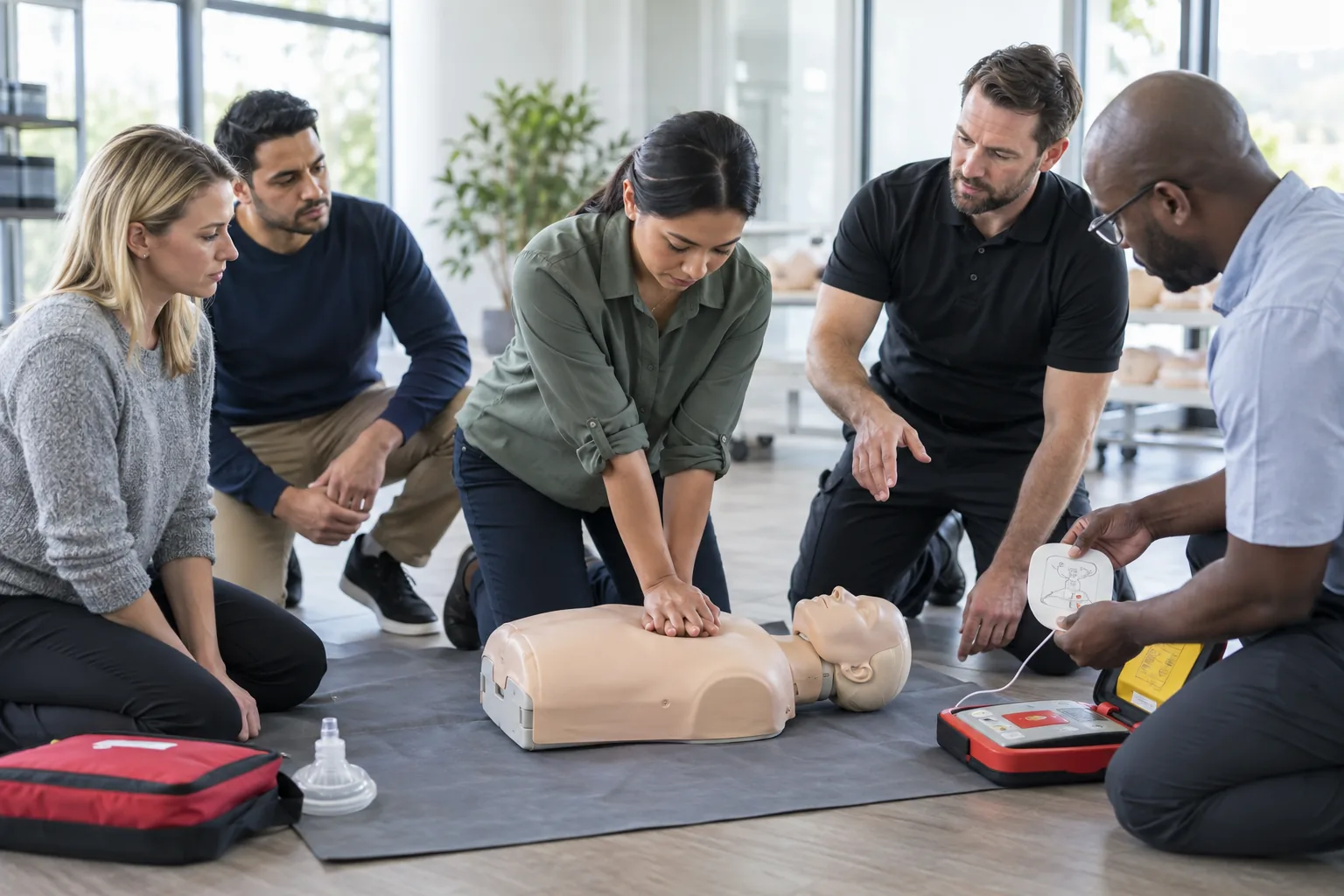
Medical emergencies at work don't send a warning. A coworker collapses, someone gets a serious cut on a table saw, a customer has a cardiac event in the lobby - and the people standing there in that first minute are whoever happens to be on shift. Whether that minute goes well often comes down to whether anyone in the room actually knows what to do.
This is the case for CPR, first aid, and AED training, and also a practical guide to figuring out who on your team actually needs it.
Why These Three Skills Usually Travel Together
CPR, basic first aid, and AED (automated external defibrillator) use tend to get trained as a package, and there's a good reason for it. First aid covers the broad range of everyday injuries - cuts, burns, sprains, choking - that happen far more often than anything dramatic. CPR addresses the specific, time-critical scenario of someone whose heart has stopped or who isn't breathing. And AED training teaches people how to use the device that dramatically improves survival odds in a cardiac emergency, in the few minutes before paramedics can realistically arrive.
None of these skills are complicated to learn, but they're also not intuitive if you've never practiced them. Compressions need to be done at the right depth and rate. AEDs are designed to be simple, but people still hesitate to grab one under pressure if they've never touched one before. Training removes that hesitation.
Who Actually Needs This Training
Frontline supervisors and shift leads are an obvious starting point - they're often the first point of contact when something goes wrong and the ones coordinating a response.
Anyone working in physically demanding or higher-risk roles - warehouse staff, construction crews, equipment operators - faces a higher baseline chance of a serious injury on the job, which makes immediate first aid response more likely to matter.
Front-of-house and customer-facing staff matter too, and it's easy to overlook them. Retail employees, gym staff, and hospitality workers deal with the public, and the public includes people who might have a medical event on-site with zero warning.
Remote or isolated worksites raise the stakes considerably, since professional emergency responders may be a long way off. If your operation has crews working somewhere far from a hospital, having several people trained in CPR and first aid isn't optional in any practical sense - it's the actual plan until help arrives.
Designated safety personnel should be trained as a baseline, but a workplace is better protected when the training isn't limited to one or two people per shift. If your trained employee is out sick or on break when something happens, coverage gaps become real gaps.
How Many People Should Actually Be Trained?
There's no universal number, but the logic is straightforward: you want enough trained people that someone qualified is present on every shift, in every part of the building or site where people work, without relying on one individual who might not be around when it matters. For larger or multi-shift operations, that usually means training well beyond just management.
Because expectations for workplace first aid coverage can vary by industry and jurisdiction, it's worth confirming what applies specifically to your operation rather than assuming a blanket standard.
AEDs: Having One Is Only Half the Job
A lot of workplaces have invested in an AED and stopped there, treating the device itself as the solution. But an AED sitting in a cabinet doesn't help anyone if nobody in the building knows where it is or feels confident using it under pressure. Training closes that gap - it covers not just the mechanics of the device, but the confidence to actually grab it and use it in the chaotic first moments of a real emergency, when hesitation costs time that can't be recovered.
Training Formats That Fit Real Schedules
CPR, first aid, and AED training is one of the more common candidates for on-site delivery, since hands-on practice with dummies and AED trainers genuinely matters more than reading about it. Our CPR, first aid, and AED training program is designed around that hands-on component.
For smaller teams or individual certification needs - say, a single new hire or a manager who needs to get current - our individual training option avoids the overhead of scheduling a full group session. For larger rollouts across departments or shifts, company training and on-site training scale more efficiently.
Getting Started
If you're trying to figure out how many people to train and on what schedule, that's worth talking through rather than guessing. All Purpose Safety Training Solutions works with employers across California - see our California locations page for where we're currently active - to build coverage plans that actually match shift patterns instead of leaving gaps.
FAQ
How long does CPR/first aid/AED certification typically last before renewal?
Certification periods vary by course and issuing organization, so check the specific timeline tied to whichever course your team completes.
Do all employees need this training, or just designated safety staff?
It depends on your workplace, but broader coverage - beyond just one or two designated people per shift - generally means better protection when an emergency doesn't wait for the "right" person to be present.
Is on-site training necessary, or can this be done fully online?
The hands-on components - chest compressions, AED practice - are difficult to learn well without in-person practice, which is why most effective programs include an on-site or in-person portion.


