Workplace Safety Insights
How forklift, aerial lift, and heavy equipment training differ, why refreshers matter, and how to build coverage across a mixed fleet.
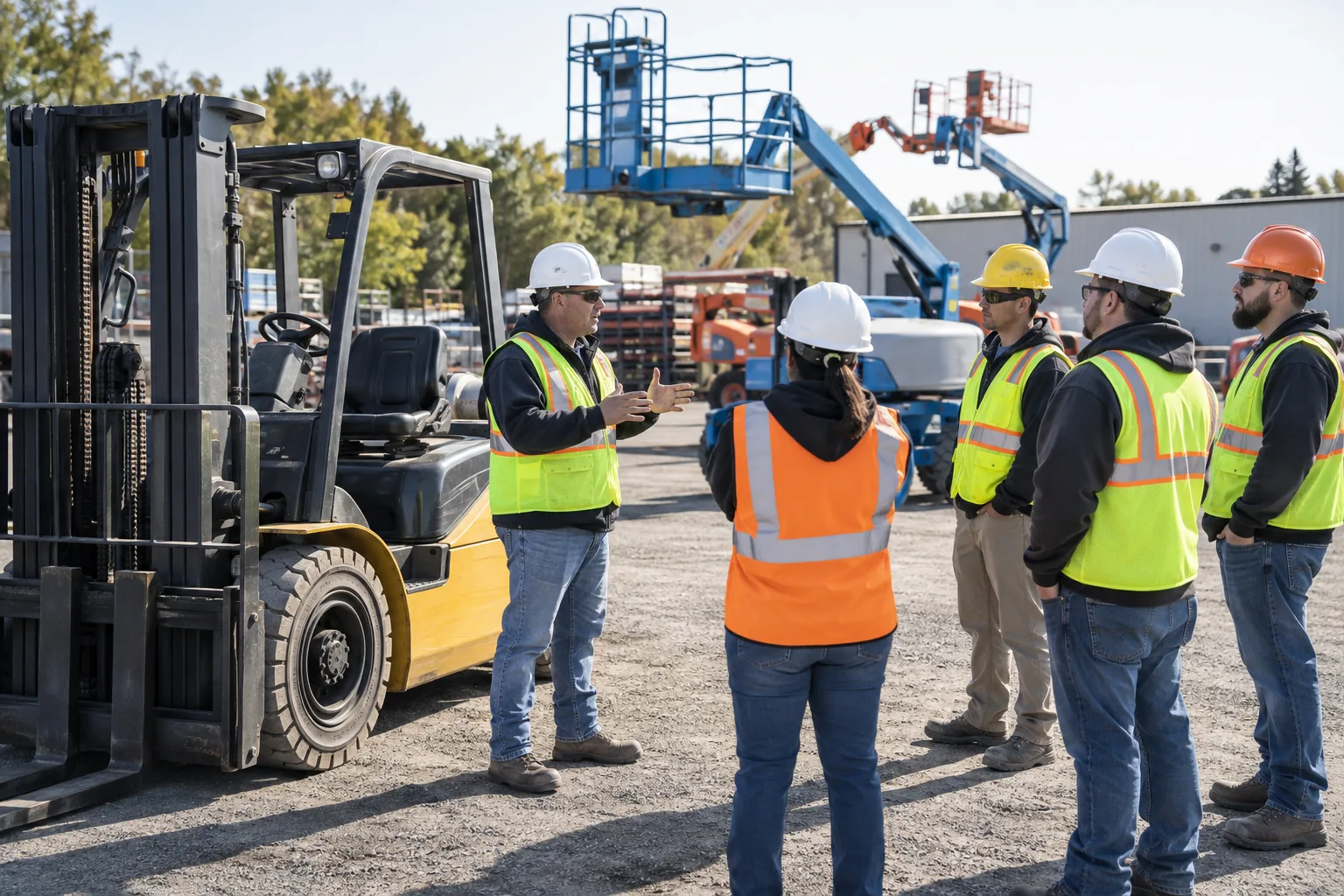
Ask five different supervisors what "equipment training" covers and you'll probably get five different answers, and that's part of the problem. Forklifts, aerial lifts (scissor lifts, boom lifts), and heavy equipment like excavators or loaders each come with distinct hazards, distinct controls, and distinct failure modes. Training that treats them as interchangeable usually ends up shallow across the board.
Here's how to think about each one, and how to build a training plan that actually matches the equipment your team runs.
Forklifts: Common Equipment, Underestimated Risk
Forklifts show up almost everywhere - warehouses, retail backrooms, manufacturing floors, construction yards - which is exactly why training on them gets treated casually. It shouldn't. Tip-overs, pedestrian strikes, and load-handling mistakes are common causes of serious injury, and a lot of that traces back to operators who learned "on the job" from a coworker rather than through structured training.
Good forklift training covers pre-operation inspection, load capacity and stability, operating in tight or shared spaces, and pedestrian awareness - not just how to move the levers. Our forklift training is built around the specific equipment your site runs, since a sit-down counterbalance forklift and a narrow-aisle reach truck don't handle the same way.
Aerial Lifts: Height Changes Everything
Scissor lifts and boom lifts introduce a different category of risk entirely - fall hazards, tip-over risk on uneven ground, and the danger of getting caught between the platform and a fixed structure overhead. Operators need to understand the specific lift they're using, since boom lifts and scissor lifts behave very differently in terms of stability and range of motion.
Fall protection knowledge overlaps here too - a worker on an aerial lift platform needs to understand harness use and anchor points in a way that's specific to that equipment, not just general fall protection theory. Our aerial lift training covers both the equipment operation and the fall-related hazards that come with working at height.
Heavy Equipment: Bigger Machines, Bigger Consequences
Excavators, loaders, graders, and similar heavy equipment carry risks that scale with their size - blind spots, ground stability, proximity to other workers and equipment, and the sheer force involved if something goes wrong. Operators need training specific to the machine they're running, and ground crew working near heavy equipment need their own awareness training on staying visible, staying clear of swing radius, and communicating with the operator.
Our heavy equipment training program addresses both sides of that - the operator and the people working around them.
Where This Overlaps With Cranes
Sites that run forklifts, aerial lifts, and heavy equipment often run cranes too, and the hazards start to layer on top of each other - multiple pieces of equipment moving in the same work zone, different operators who may not always see each other. If your site includes crane work, it's worth reviewing crane operator training alongside your other equipment training rather than treating it as a separate program with no connection to the rest of the fleet.
The Refresher Problem
The most common mistake we see isn't a lack of initial training - it's the assumption that initial training is enough forever. Skills fade. New equipment gets introduced. A site's layout changes. An operator who trained on one model gets handed a different one without a second thought. Any of these should trigger a refresher, not just a fixed calendar date.
It's also worth remembering that "experienced" and "trained" aren't the same thing. An operator who's run equipment for fifteen years without a documented training refresh is a liability from a compliance standpoint, even if their actual skill is solid. Keeping records current protects the business as much as it protects the worker.
Building Coverage Across a Mixed Fleet
If your operation runs multiple types of equipment, start by mapping out which employees operate which machines, and don't assume overlap - someone certified on a forklift isn't automatically qualified on an aerial lift. From there, identify gaps: new hires who haven't been trained yet, equipment that's been added since the last training round, and anyone overdue for a refresher.
For sites with ongoing turnover or seasonal hiring, train-the-trainer programs are worth considering - they let a qualified person on-site handle routine refreshers and new-hire onboarding without scheduling an outside instructor every time.
Because certification requirements can vary depending on equipment type, industry, and jurisdiction, employers should confirm exactly what applies to their specific operation.
Given how much of this training depends on hands-on practice with the actual machines, on-site training tends to be the more practical delivery format compared to a purely classroom-based approach.
Getting Started
If you're not sure where the gaps are in your current equipment training coverage, that's a reasonable first question to bring to us. Contact All Purpose Safety Training Solutions to talk through your fleet and crew.
FAQ
Does someone trained on one forklift model need retraining for a different model?
Often yes, at least a shorter equipment-specific orientation, since controls and handling characteristics can differ meaningfully between models.
How often should equipment operators get refresher training?
It depends on the equipment and applicable standards, but a good trigger list includes new equipment, changed site conditions, a near-miss or incident, and a set refresher interval regardless of those events.
Can aerial lift and forklift training happen in the same session?
They're typically taught separately since the hazards and controls differ significantly, though both can be scheduled back-to-back during the same on-site visit.


