Workplace Safety Insights
What on-site safety training involves, when it beats classroom or online courses, and how to plan sessions that hold up under real conditions.
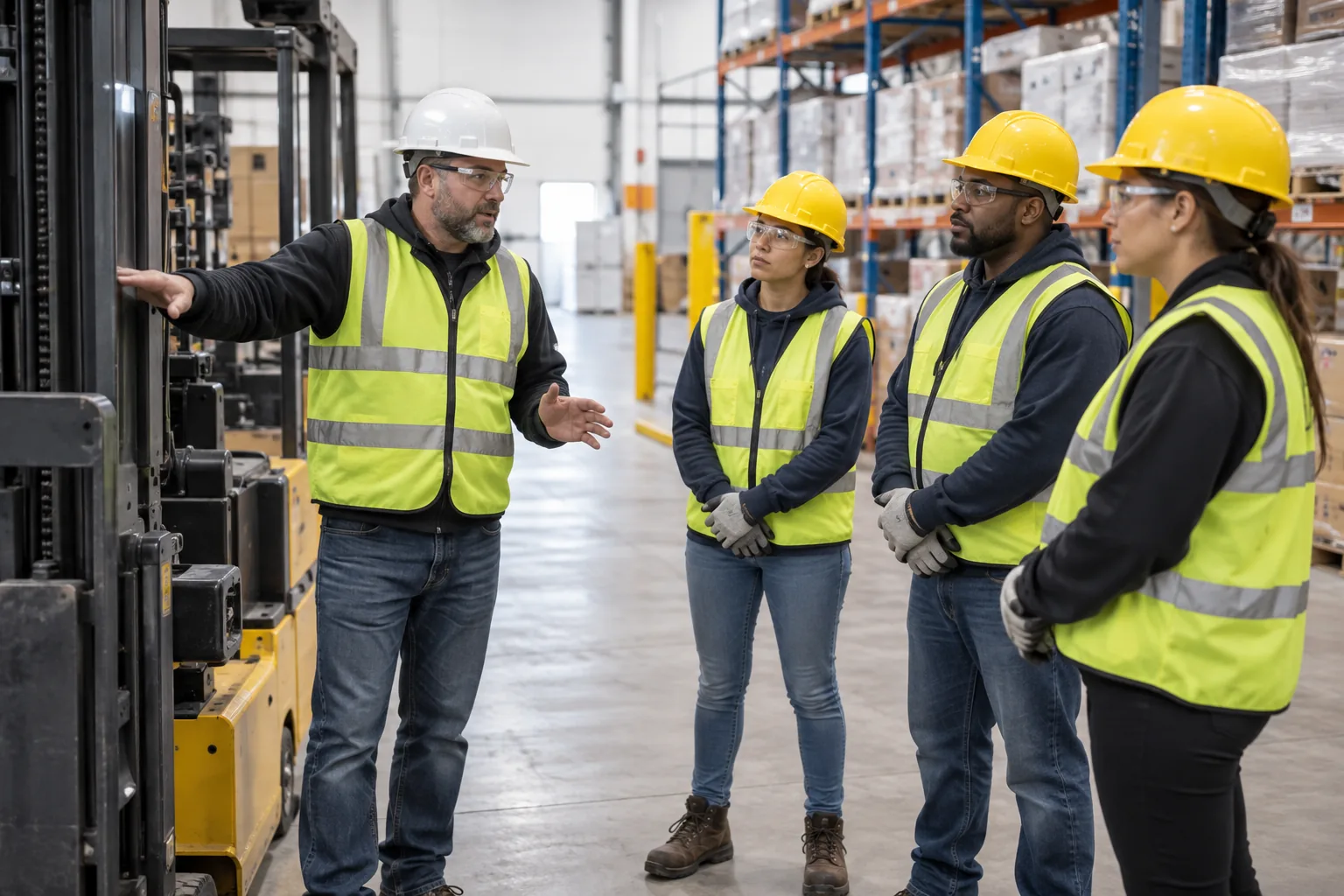
Most safety training falls into one of two camps: sit in a room (or on a webinar) and absorb information, or get out on the actual job site and work through it hands-on. On-site training is the second kind, and for a lot of hazards, it's the only version that actually sticks.
Here's what it involves, when it's the right call, and how to plan sessions that don't just check a box.
What On-Site Training Actually Means
On-site safety training happens where your people work - the warehouse floor, the construction site, the loading dock - rather than in a classroom disconnected from the job. Instead of talking through hazards in the abstract, an instructor walks your team through the actual layout, the actual equipment, and the actual conditions they deal with every shift.
That might mean covering machine operation, PPE use, emergency evacuation routes specific to your building, hazard recognition tied to your particular process, or job-specific standards that only apply because of what you do and where you do it.
Why Employers Lean Toward It
It matches the real hazards. A generic safety video can't account for the fact that your loading dock has a blind corner or that your break room doubles as a chemical storage overflow area. On-site training can.
People learn by doing. Watching someone demonstrate lockout/tagout on a screen is fine. Actually locking out the machine your team uses every day, under supervision, is what makes it stick.
Mistakes get caught immediately. If someone's holding a harness wrong or skipping a step in a procedure, a trainer standing next to them catches it before it becomes a habit - or an incident.
It supports your paper trail. A lot of safety standards expect training that accounts for site-specific conditions, not a one-size-fits-all certificate. On-site sessions generate documentation that reflects that.
Planning a Session That Actually Works
Start with a hazard assessment. Before you book anything, walk the site (or have someone qualified do it) and figure out what's actually risky. Training that doesn't match your real hazards is wasted time.
Pick topics based on what you found. Common ones include equipment operation, fall protection, lockout/tagout, hazard communication, and emergency preparedness - but your list should reflect your site, not a generic template. If your crew works near active roadways or lane closures, traffic control and flagging training belongs on the list. If you've got exposed machinery on the floor, machine guarding training probably does too.
Get the right instructor. Someone who's trained warehouse crews for years might not be the best fit for a construction site, and vice versa. Match the trainer's background to your industry.
Don't treat it as a one-time event. New hires need it. People need it again when job duties or equipment change. And frankly, everyone benefits from periodic refreshers even when nothing's changed - skills fade faster than people expect.
Our on-site training programs are built around this kind of assessment-first approach rather than a fixed curriculum.
What Employers Can Do to Support Training
Training only works if the environment around it supports it. That means making clear to staff that safety training isn't optional busywork, having the right PPE and materials on hand before the session starts, actually encouraging questions instead of rushing through slides, and keeping records that hold up if someone ever asks "when was this person last trained on this?"
On-Site vs. Online vs. Webinar: Which One Do You Actually Need?
None of these formats are mutually exclusive, and most employers end up using a mix.
On-site training wins when hands-on practice matters - operating equipment, practicing a physical procedure, or walking a specific hazard zone. Online training works well for material that's mostly knowledge-based and doesn't require a physical demonstration, and it's easier to schedule around shift work. Webinar training sits in between - live instruction, real-time Q&A, but without travel.
A common approach is covering the theory portion online or via webinar, then reserving on-site time for the hands-on pieces that actually require it. That keeps costs and scheduling reasonable without cutting corners on the parts that need a body in the room.
If you want your own supervisors able to run refreshers between formal sessions, look into train-the-trainer programs - it's a practical way to keep training current without booking outside instructors every time.
Getting Started
If you're not sure which format fits your team, that's a reasonable place to start the conversation. Reach out to All Purpose Safety Training Solutions, or look at our company training options to see how programs are typically structured.
FAQ
Who needs on-site training?
Anyone working around site-specific hazards - new hires especially, along with anyone operating equipment or working in a role where conditions have recently changed.
How long does a session usually take?
It depends entirely on the topic. Some sessions run a couple of hours; others, especially equipment certification programs, take longer.
Can on-site training happen outdoors or at remote sites?
Yes - it's built to adapt to the environment your team actually works in, not the other way around.


